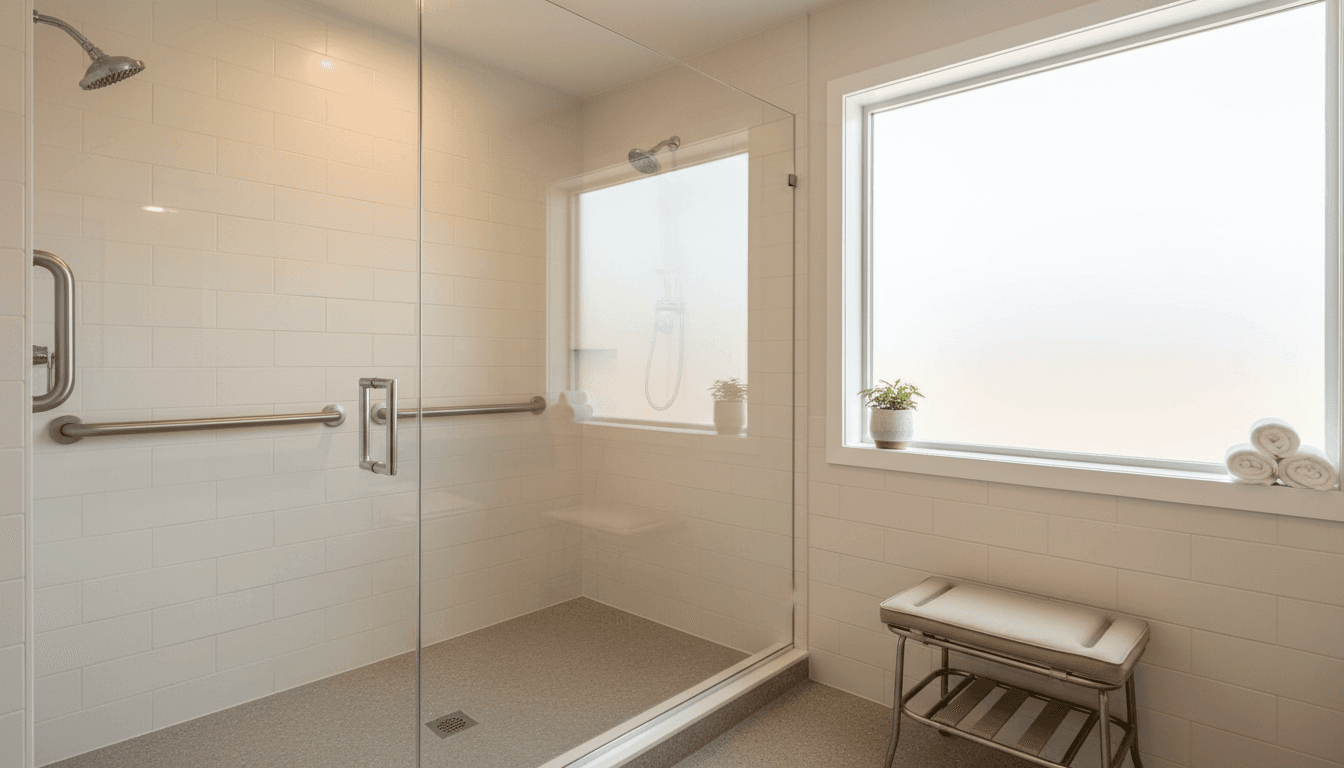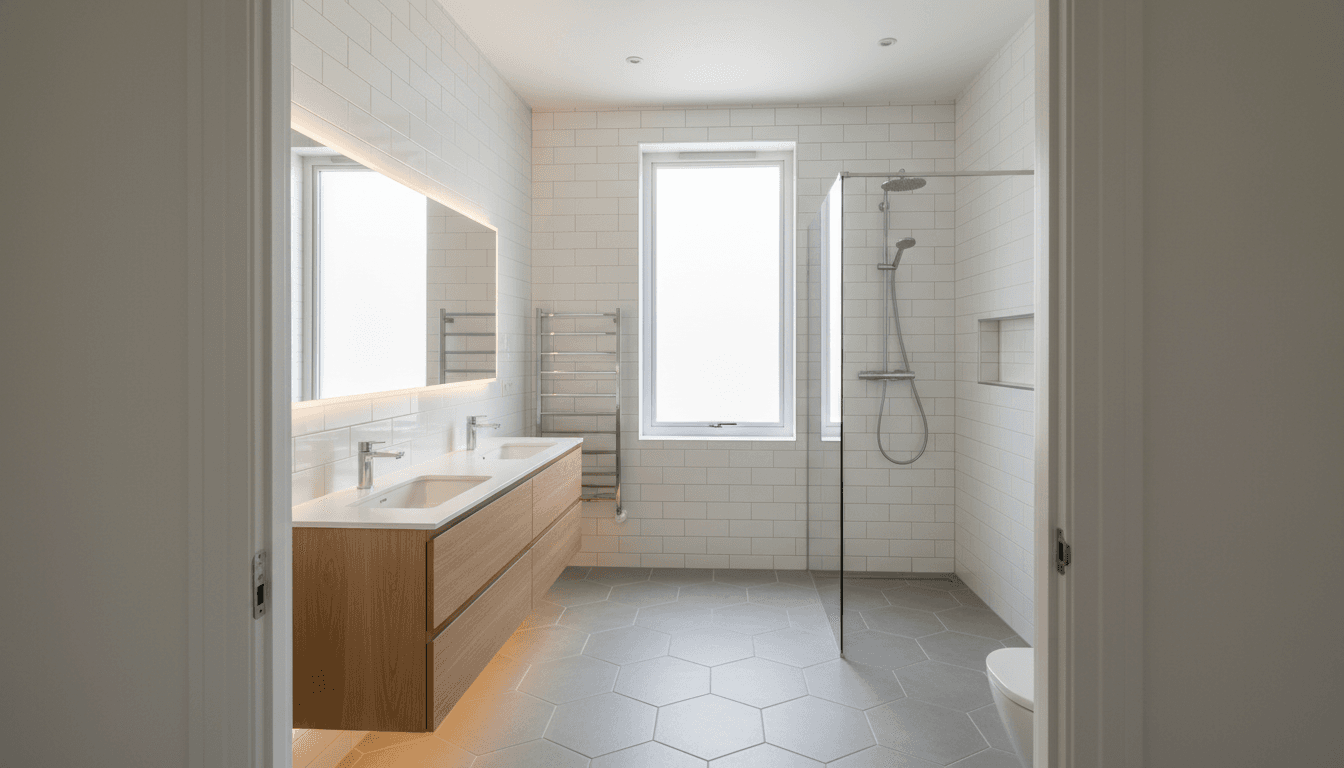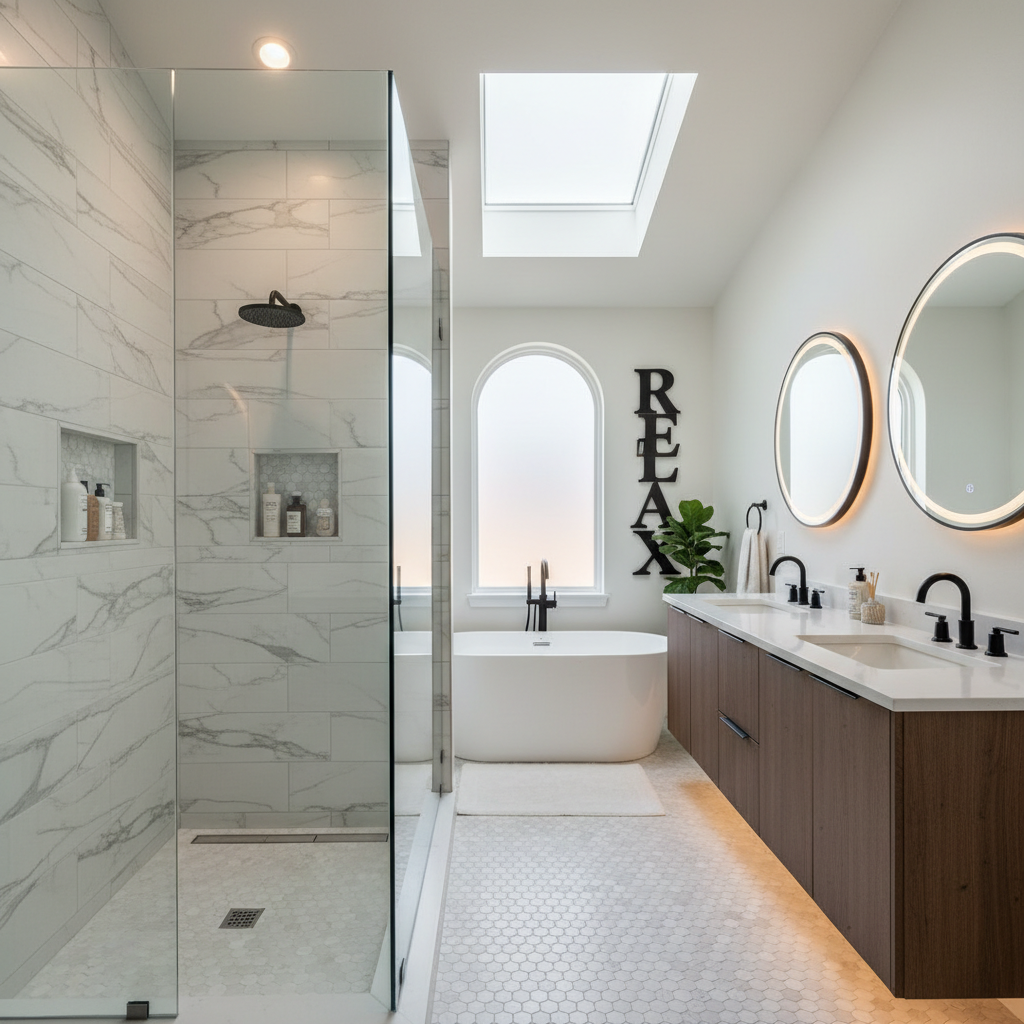
The best bathroom remodel materials prioritize moisture resistance and durability, with porcelain tile and quartz serving as top choices for flooring and countertops. These dense materials resist cracking and water damage more effectively than ceramic alternatives, ensuring a long-lasting and low-maintenance finish for any renovation project.
Most homeowners focus on the aesthetic of a bathroom remodel only to find that their beautiful new space begins to deteriorate within a few short years. Peeling vanity finishes, cracked floor tiles, and stubborn mold in grout lines are common frustrations that result from choosing materials that cannot withstand the constant humidity of a bathroom environment. A successful renovation requires more than just a cohesive color palette; it demands a deep understanding of how different surfaces interact with moisture and heat. Selecting high quality, durable materials is the only way to ensure your investment looks as stunning ten years from now as it does on completion day. This guide breaks down the technical differences between porcelain and ceramic, compares the resilience of quartz versus natural stone, and identifies the best cabinet constructions for wet areas. You will gain a clear list of essential materials to help you build a bathroom that balances luxury with lasting performance.
Why Material Selection Defines Your Bathroom Longevity
In a Fillmore home, the bathroom is easily the most demanding environment for building components. Unlike a bedroom or living area, a bathroom undergoes rapid, daily cycles of high moisture and significant temperature fluctuations. This constant stressor means that selecting bathroom remodel materials is far more than a stylistic choice. It is a critical engineering decision designed to prevent the costly consequences of mold growth, structural rot, and premature surface wear.
Selecting a material based solely on its appearance often leads to failure within a few years if that material cannot withstand localized humidity. Proper selection involves understanding how water interacts with different surfaces, from the porosity of a stone tile to the density of a vanity cabinet. At Bathroom & Stuff, our professional bathroom remodeling services prioritize materials that offer a perfect equilibrium between rapid installation and long term resilience.
About Bathroom & Stuff and our approach: we specialize in efficient two to three day standard renovations that do not compromise on quality. By utilizing high grade, moisture resistant components, we ensure that your space remains beautiful and structurally sound despite the rigors of daily use. Investing in the right foundation now prevents the need for invasive repairs in the future.
The Foundation: Most Durable Bathroom Flooring for High Moisture
Selecting the most durable bathroom flooring for high moisture requires balancing structural integrity with safety. Because the floor is the primary collection point for standing water and steam, it demands a surface that can handle total immersion without warping or degrading.
Luxury Vinyl Plank (LVP) has become a staple in modern renovations because it is 100% waterproof and offers a softer, warmer feel underfoot compared to stone. It is particularly effective for efficient upgrades where comfort and water resistance are top priorities. In contrast, porcelain tile represents the peak of longevity. It is fired at extreme temperatures to achieve high density, which results in superior scratch resistance and an almost zero water absorption rate.
Material | Water Resistance | Durability | Maintenance Level |
|---|---|---|---|
Porcelain Tile | Excellent | High | Low |
Luxury Vinyl Plank (LVP) | Excellent | Medium-High | Low |
Natural Stone | Moderate (Requires Sealing) | High | High |
Natural stone, such as slate or marble, provides a sophisticated, classical aesthetic. However, these materials are naturally porous; they require consistent sealing to prevent water penetration and staining. For most Fillmore homeowners, porcelain or LVP provides a more practical, low maintenance foundation.
Safety must remain a central consideration alongside durability. When evaluating your options, always check the Coefficient of Friction (COF) rating. A COF of 0.42 or higher indicates sufficient slip resistance for wet areas. This technical specification is vital for homes with seniors or children, ensuring the floor remains safe even when saturated. Our professional bathroom remodeling services prioritize materials that meet these rigorous safety standards while maintaining the design integrity of the space.
Porcelain vs Ceramic Tile: Which is Better for Your Remodel?
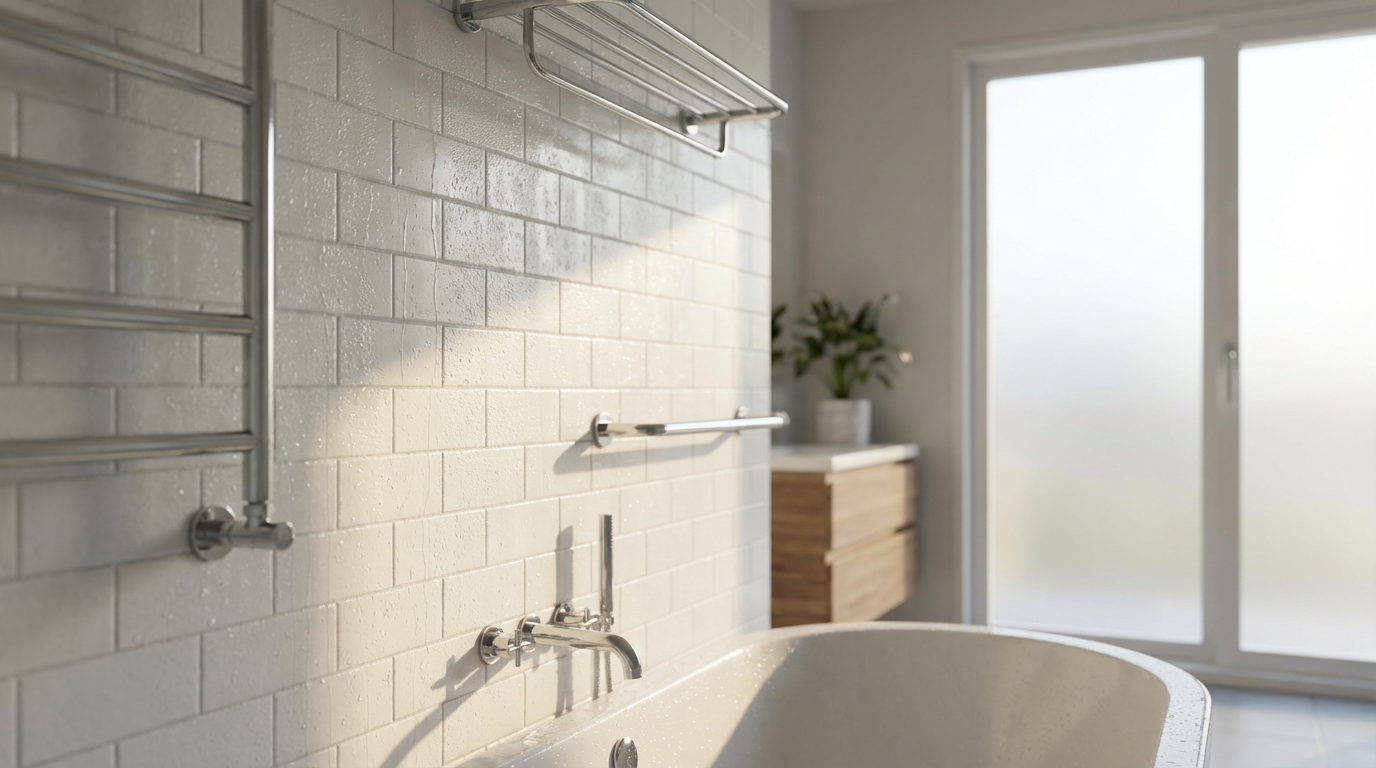
While porcelain and ceramic share a similar clay based origin, their performance in high moisture environments differs significantly due to the manufacturing process. Porcelain is a specialized subtype of ceramic that is fired at much higher temperatures and under greater pressure. This process results in a material that is exceptionally dense and nearly impervious to water, with a certified absorption rate of 0.5% or less. For homeowners prioritizing the longevity of their bathroom remodel materials, understanding this distinction is crucial for selecting the right surface for specific zones.
Porcelain is the definitive choice for shower floors and high traffic areas. Its density provides superior resistance to cracks and stains, though this toughness comes with practical trade-offs. It is generally more expensive than ceramic and notoriously difficult to cut; installers must use specialized diamond blades to avoid shattering the tile. For this reason, professional installation is often preferred to ensure precise fitment around drains and corners.
Ceramic tile offers a budget friendly alternative for vertical surfaces. Because it is softer and less dense than porcelain, it is easier to cut and install, making it a common choice for decorative accents or low traffic walls. However, its higher porosity makes it less suitable for floors where heavy impact or constant saturation occurs.
Feature | Porcelain Tile | Ceramic Tile |
|---|---|---|
Firing Temperature | Very High (1,200°C+) | Moderate |
Water Absorption | < 0.5% (Impervious) | Higher (Porous) |
Cutting Difficulty | High (Requires Diamond Blade) | Low (Score and Snap) |
Best Application | Shower Floors, High Traffic | Low Traffic Walls, Accents |
At Bathroom & Stuff, our professional bathroom remodeling services often recommend porcelain for wet areas to guarantee a moisture proof seal. You can learn more About Bathroom & Stuff and our commitment to structural integrity by reviewing our material standards for custom renovations.
Shower Walls and Wet Areas: What Tiles to Avoid
Selecting the wrong bathroom remodel materials for a shower stall can lead to recurring mildew and structural degradation. While aesthetic appeal is important, certain tiles are technically unsuitable for constant immersion. Highly porous natural stones, specifically unsealed travertine, limestone, and marble, should be avoided in wet areas unless you are prepared for rigorous maintenance. These stones contain microscopic voids that trap moisture, soap scum, and minerals from the water supply, leading to deep staining and potential stone rot over time.
Minimizing grout lines is a strategic way to increase the longevity of your shower walls. Grout is the most vulnerable component of a tile assembly because it is naturally porous and prone to cracking; it is the primary failure point where moisture bypasses the surface to reach the substrate. Using large format bathroom tiles significantly reduces the total linear footage of grout, creating a cleaner look and a more watertight barrier.
For those seeking a balance between a classical aesthetic and modern durability, subway tiles remain a premier choice. These ceramic or porcelain tiles offer a timeless look while being far more resilient than natural stone. Our professional bathroom remodeling services focus on these high performance selections to ensure your wet areas remain sanitary and leak free. You can learn more About Bathroom & Stuff and our commitment to using failure resistant materials in every custom renovation.
Countertop Comparisons: Quartz vs Granite and Marble
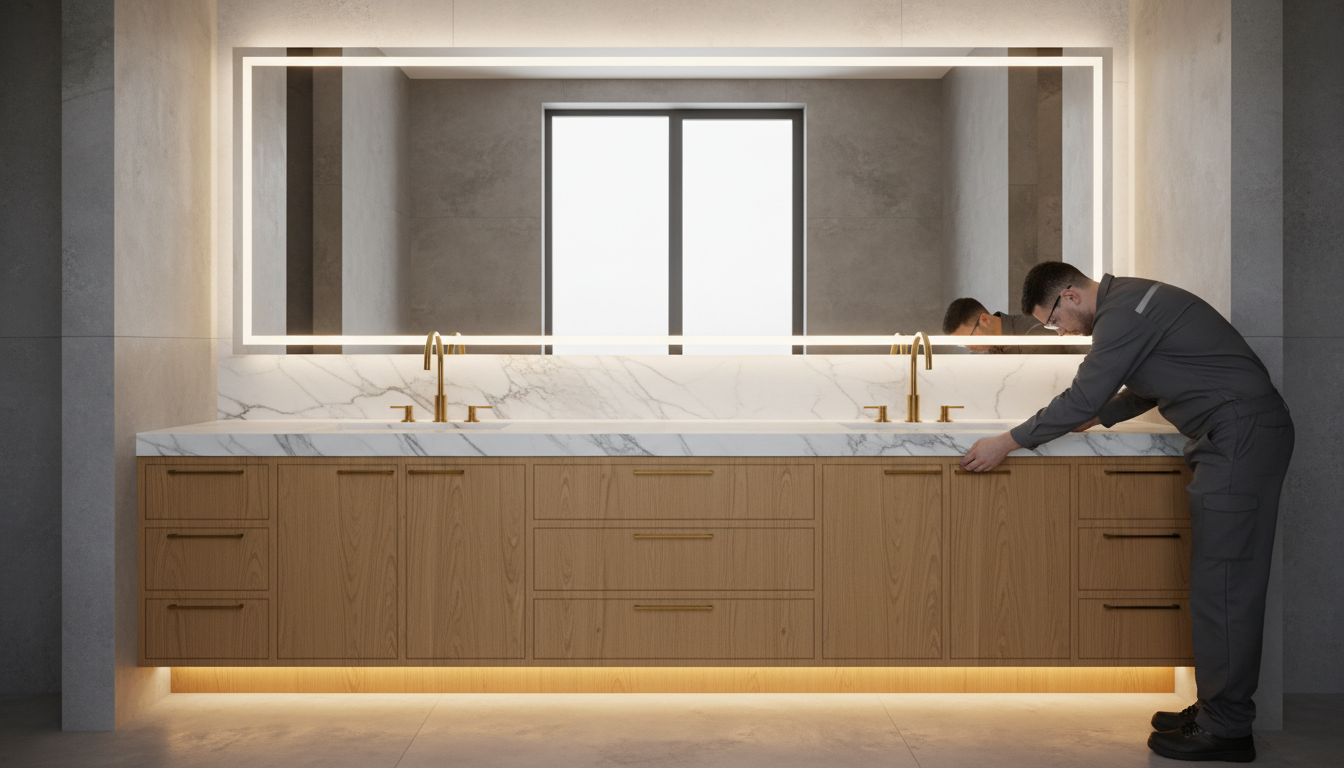
Selecting the surface for your vanity is the next critical step in curating high-performance bathroom remodel materials. While shower walls face constant water, the countertop must withstand standing puddles, toothpaste, makeup, and chemical cleaners. Quartz has emerged as the professional choice for Fillmore homes because it is an engineered, non-porous stone. Unlike natural alternatives, quartz is bound with resins that seal every microscopic void. This prevents bacterial growth and eliminates the need for periodic sealing, making it nearly impervious to the spills typical of a busy morning routine.
Granite remains a popular contender due to its extreme heat resistance and unique, natural patterns. However, granite is inherently porous. To maintain its integrity and prevent deep staining from oils or pigments, it requires regular application of a chemical sealer. Marble, while offering an unmatched classical elegance, is the most high-maintenance option. It is high in calcium carbonate, which makes it prone to etching. Acidic substances, even some common soaps or specialized bathroom cleaners, can dull the polished surface physically, creating etch marks that cannot be simply wiped away.
Material | Porosity | Maintenance | Resistance to Etching |
|---|---|---|---|
Quartz | Non-porous | Very Low (No sealing) | High |
Granite | Porous | Moderate (Annual seal) | Moderate |
Marble | High Porosity | High (Strict sealing) | Low |
At Bathroom & Stuff, we categorize quartz as the pro pick for longevity. Our professional bathroom remodeling services often favor this material for its ability to mimic the aesthetic of natural stone without the associated structural vulnerabilities. You can learn more About Bathroom & Stuff and our design philosophy by reviewing our recent custom projects where durability and style meet.
Selecting the Right Bathroom Vanity Cabinet Materials
While the countertop surface handles direct contact with water, the structural integrity of your vanity rests entirely on the materials used for the cabinet box. The box serves as the skeleton of the unit, supporting the weight of heavy stone tops and integrated sinks. Homeowners often prioritize the appearance of cabinet doors, but the internal composition determines how long the unit will remain functional in a high humidity environment.
Material | Humidity Resistance | Structural Strength | Common Use |
|---|---|---|---|
Furniture-Grade Plywood | High | Excellent | Premium Cabinet Boxes |
Solid Wood | Moderate | High | Doors and Face Frames |
MDF / Particle Board | Low | Low | Budget, Mass-Produced Units |
Solid wood is an excellent choice for face frames and doors due to its density and aesthetic appeal; however, for the box itself, furniture grade plywood is technically superior. Plywood is engineered with thin layers of wood veneer glued in alternating grain directions. This cross grain construction makes it remarkably stable and resistant to the expansion and contraction caused by Fillmore's seasonal humidity shifts.
Avoid vanities constructed from cheap particle board or low density MDF. These materials are comprised of compressed wood fibers and resins that act like a sponge when moisture is present. Once water penetrates the finish, these materials swell and lose their structural bond, often leading to sagging shelves or failing hinges. At Bathroom & Stuff, our professional bathroom remodeling services utilize custom solutions that prioritize these structural details. We ensure every vanity box can withstand daily moisture exposure without compromising the integrity of your bathroom remodel materials. You can learn more About Bathroom & Stuff and our specialized approach to durable cabinetry in our project gallery.
The Essential Bathroom Remodel Materials List
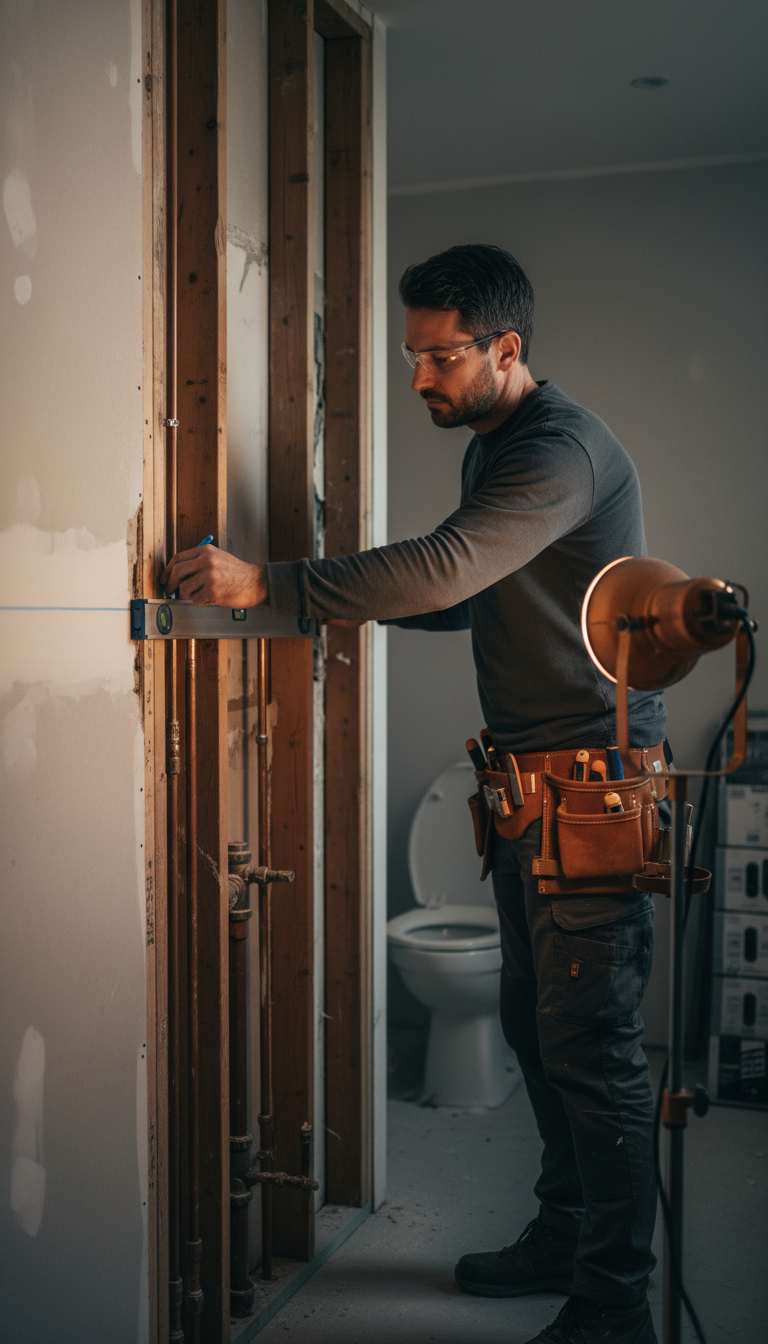
A comprehensive bathroom remodel materials list serves as the primary tool for maintaining project timelines and budget accuracy. Every Fillmore renovation requires a precise inventory of technical components before the demolition phase begins. Using high performance materials sourced through our professional bathroom remodeling services ensures that these individual parts function as a unified, moisture resistant system.
Category | Essential Components |
|---|---|
Surface Materials | Floor tile, wall tile, waterproof grout, high grade sealer, backer board, waterproofing membrane. |
Fixtures | Vanity cabinet, undermount or vessel sink, low flow toilet, bathtub or pre sloped shower pan. |
Hardware & Trim | Faucets, thermostatic shower valves, showerheads, towel bars, drawer pulls, light fixtures. |
For homeowners seeking fully custom solutions, About Bathroom & Stuff details how we source these items to match specific design aesthetics while maintaining structural integrity. Finalizing this checklist ensures that all logistical requirements are met before the first tile is laid.
Selecting the right materials for your bathroom is about balancing long-term durability with the aesthetic you love. From high-quality tiles to moisture-resistant vanities, making informed choices today ensures a beautiful space for years to come. If you feel overwhelmed by the options or simply want expert help to bring your vision to life, we are here to support you. You can learn more about our approach to design and how we help homeowners navigate these important decisions; our goal is to make your renovation as seamless as possible.